Every bagel is made with a stiff sourdough starter that I mix into a low hydration dough, which I then bulk ferment, fold once, hand roll into right-sized shapes, and cold ferment overnight. Finally, I boil the bagels with barley malt and bake them with steam. What does this mean, and why does it matter? It means you get chewy, flavorful bagels that look, taste, and crunch like they should. If you want a bit more of an explanation, read my bagel philosophy section below.
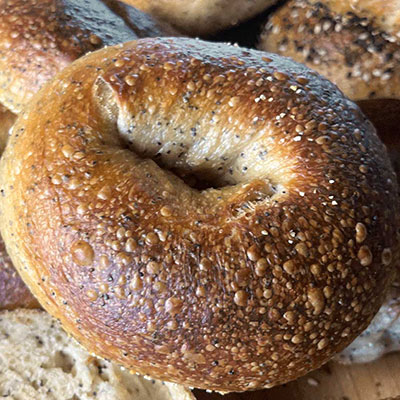
Onion
My onion bagels aren't like others you may have tried. Instead of sprinkling onion flakes onto the top of the bagel before it bakes, I mix onion directly into the dough — where it then shares it's oniony goodness through the entire bagel, not just the top. I use dry onion flakes rather than fresh for two reasons: concentrated flavor and less moisture.
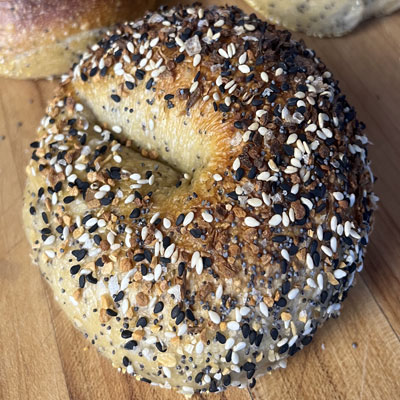
Everything/Onion
I add homemade everything mix to the onion bagels for an extra special bit of yumminess. The everything mix is poppy seeds, white and black sesame seeds, onion flakes, garlic flakes, and salt. It's actually pretty awesome on just about anything.
Bagel Philosophy
New York style bagels aren't traditionally made with sourdough. One of the best descriptions of how a traditional bagel should be made that I've seen is in a book called A Blessing of Bread, by Maggie Glezer, and she does a few things that I don't do. I've used her recipe, and it's great, but I love working with sourdough because it's an endlessly complex living thing — and I love the taste.
My approach borrows from tradition but adapts it to sourdough.
I use a low-hydration dough, which is traditional for bagels and quite different from most sourdough breads. Where a typical sourdough loaf might be made with 70% water or more, bagel dough is closer to the mid-50s. That firmer dough can be more resistant to mixing, but it naturally develops strength and chew from the very beginning.
The overnight cold ferment slows everything down. That time lets flavor develop naturally, adds a gentle tang, and helps create the kind of blistered crust and open crumb that only long fermentation produces.
Before baking, each bagel is boiled in water with barley malt. That step sets the crust, adds a subtle sweetness, and gives the bagel its signature shine and bite.
Traditionally, bagels were baked on water-soaked boards, which served two purposes: they provided a surface for the bagels to hold their shape, and they introduced moisture into the oven so the crust could expand before setting. I’ve baked bagels this way myself and appreciate what the method does.
In my current setup, I use a steam-injected oven instead. The effect is similar — controlled steam at the start of the bake allows the bagels to rise properly and develop a satisfying crust while remaining chewy on the inside — and it gives me consistency I’m very happy with.
My goal isn’t to reinvent the bagel — it’s to make one that respects the tradition while leaning into what sourdough does best.
Ready to try them?
I bake weekly. Reach out at mailto:bagelwolfbakery@gmail.com or check my hotplate page. Note that I'm still in development mode, so things might be a bit irregular.